AI4 2025 transformed the MGM Grand in Las Vegas into a working lab for enterprise AI. Across three days of keynotes, breakouts, and a large expo, the conference emphasized auditable AI, multi-agent execution, and measurable outcomes—drawing 8,000+ attendees, 600+ speakers, and 250+ exhibitors.
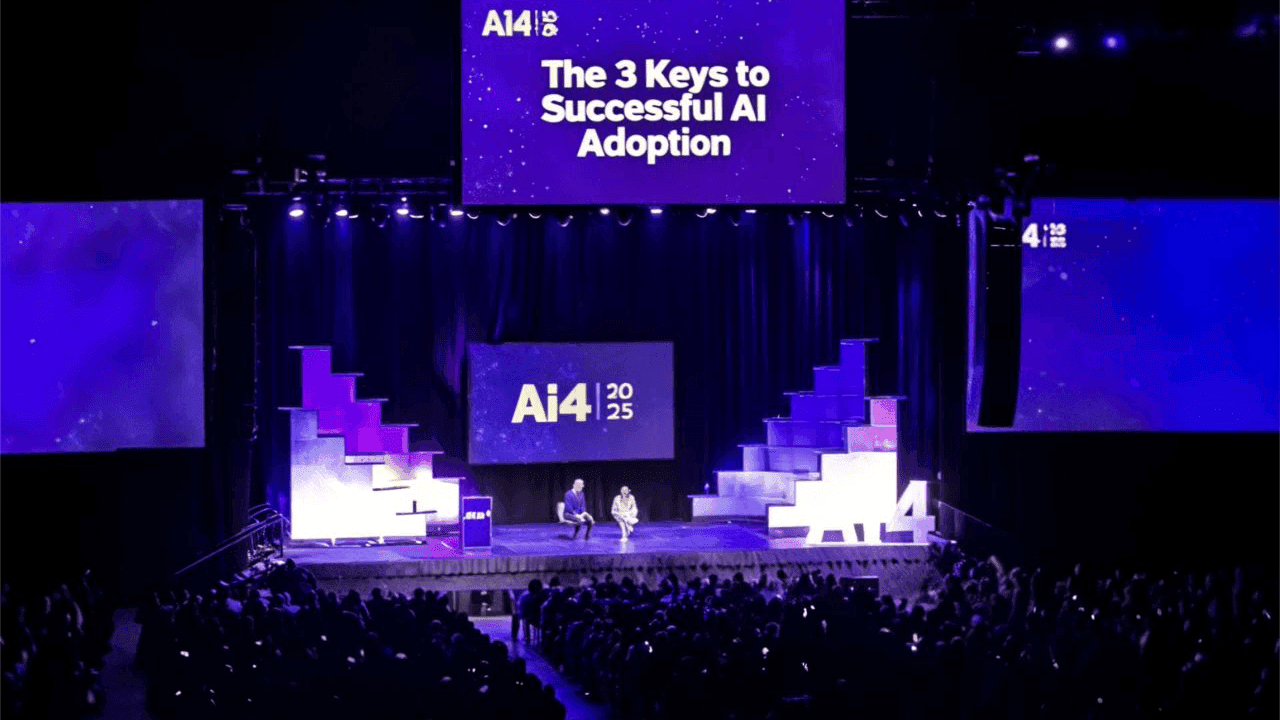


AI4 2025 ran August 11–13, 2025 at the MGM Grand Conference Center, Las Vegas, combining main-stage keynotes with specialized tracks and an expo floor oriented to hands-on product evaluation. Multiple listings and coverage place AI4’s 2025 edition at MGM Grand on these dates.
Scale & profile. Public event briefs consistently cite 8,000+ attendees, 600+ speakers, and 250+ exhibitors, underscoring AI4’s position as a major North American hub for enterprise AI execution and buying decisions.
City backdrop. August in Las Vegas is peak-summer: typical highs near 104–99°F (40–37°C) with very low cloud cover—bright, dry days and warm neon-lit nights around the Strip. This climate framed late-evening meetups after full expo days.
Talks and expo demos centered on validation and monitoring—bias checks, drift alerts, lineage/audit trails—as prerequisites for credibility in regulated environments. The message: without observability and auditability, scale stalls. (Event positioning echoed across third-party guides.)
The show floor highlighted multi-agent architectures orchestrating end-to-end workflows, compressing timelines from weeks to minutes with embedded governance (permissions, logs, human-in-the-loop). Program blurbs and vendor materials emphasized operational AI over prototypes.
Speakers stressed that value lands only when people actually use AI systems—tying outcomes to change-management, usage metrics, and incentives rather than model scores alone. This “operate on outcomes” framing appeared in session previews and recaps.
Two recurring frameworks provided execution scaffolding:
AI4 2025’s core signal was clarity: enterprise AI wins on trust, governed scale, and human adoption. The venue scale and program design—thousands of practitioners, hundreds of speakers, and a dense expo—reflected a market shifting from experiments to auditable, operated systems. In Las Vegas’s peak-summer setting—blazing days and neon nights—the narrative was consistently practical: instrument your models, orchestrate with guardrails, and manage adoption like a product. Organizations that internalize these mechanics will convert AI from promise to repeatable, compliant, outcome-driven operations—the kind that stand up in boardrooms and in regulated audits alike.