A/B tests are a cornerstone for measuring the impact of interventions in digital products and marketing. However, when treatment and control groups differ in their initial characteristics, results may be distorted by statistical noise and false positives. This article examines how to preserve covariate balance using techniques such as stratified sampling and rerandomization to improve experiment reliability and produce more accurate conclusions.



A/B testing is widely used to evaluate the impact of changes in digital products, marketing campaigns, or business strategies. In these experiments, users are split into treatment and control groups to measure whether an intervention causes meaningful changes in selected outcomes.
One of the biggest challenges in A/B experiments is ensuring that both groups are comparable from the start. Differences in characteristics like age, prior behavior, or geographic location can affect outcomes and lead to incorrect interpretations. For this reason, covariate balance becomes a key factor in improving A/B experiment quality.

In experimentation, a false positive occurs when a statistically significant effect is detected even though no real difference exists between groups. This can happen when user characteristics differ between the treatment and control groups. For example, if one group contains more frequent users or habitual buyers, the experiment’s outcome could reflect that initial difference rather than the real effect of the intervention. Key points:
Covariates are participant characteristics that can influence an experiment’s outcome, such as age, gender, purchase history, or frequency of use. When these variables are balanced between treatment and control groups, the experiment can better isolate the intervention’s true effect. Key points:
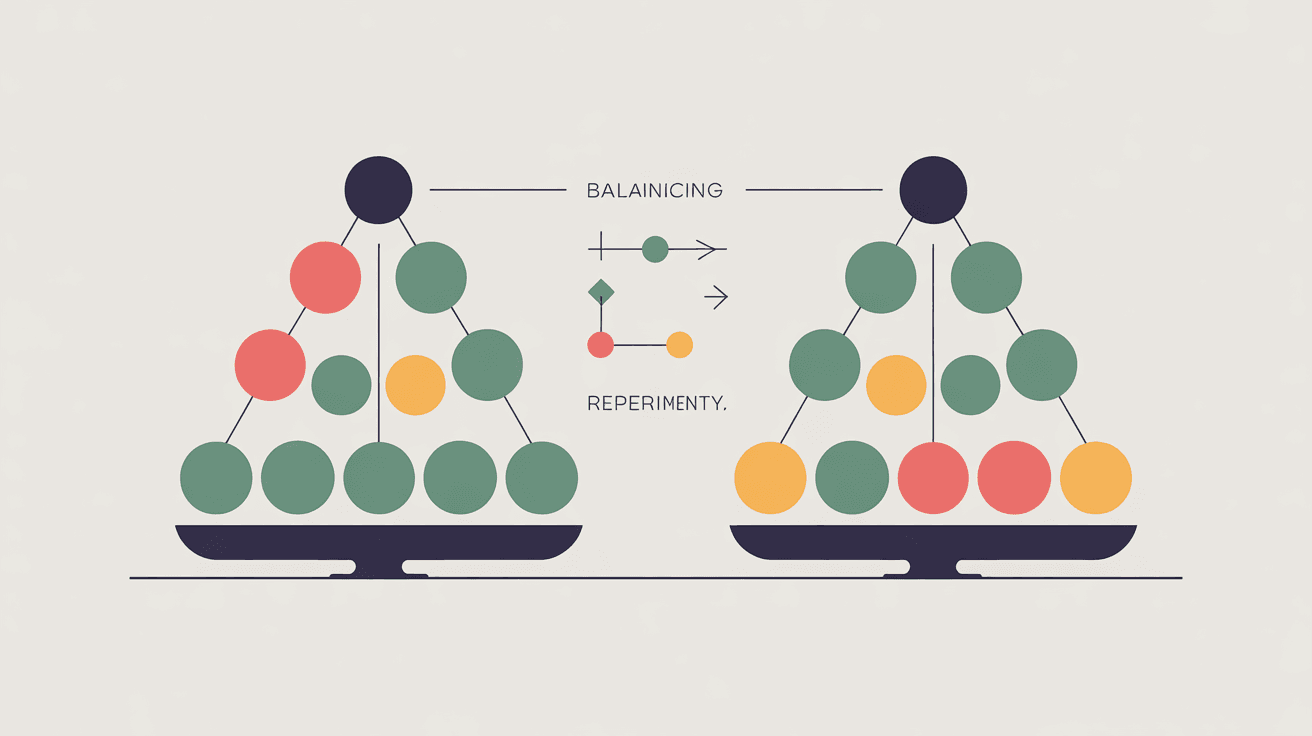
Stratified sampling divides participants into subgroups based on relevant characteristics and assigns treatment or control within each subgroup. For example, if geographic location matters, users can be grouped by region and then evenly assigned to each experimental arm. Key points:
Rerandomization repeats the random assignment process until covariate balance reaches an acceptable level. This method computes a distance metric between the groups’ average characteristics—such as the Mahalanobis distance. If the difference is too large, the assignment is redone until a suitable balance is achieved. Key points:

Careful A/B experiment design is essential for obtaining reliable results, maintaining covariate balance between treatment and control groups helps reduce statistical noise and avoid false positives. Techniques like stratified sampling and rerandomization provide practical ways to improve experimental design before running the test. By applying these approaches, organizations can draw more precise conclusions and make decisions based on stronger evidence.