Go 1.24 introduces tool directives a feature that simplifies managing CLI tools within projects, at first glance it seems minor, but it directly impacts technical governance, reproducibility, and the operational maturity of backend teams. This article explains why managing tools is also an architectural decision and how this update reduces friction, invisible debt, and unnecessary complexity.


In backend teams we usually talk about architecture when discussing databases, design patterns, or scalability, we rarely talk about architecture when we talk about tools. Yet the way we manage linters, code generators, or static analyzers also shapes system stability, those tools influence how software is built, validated, and evolved.
With Go 1.24, the introduction of tool directives not only simplifies CLI tool management it raises the standard for how teams can handle their technical environment with greater consistency and less friction. In practical terms, this is technical governance.
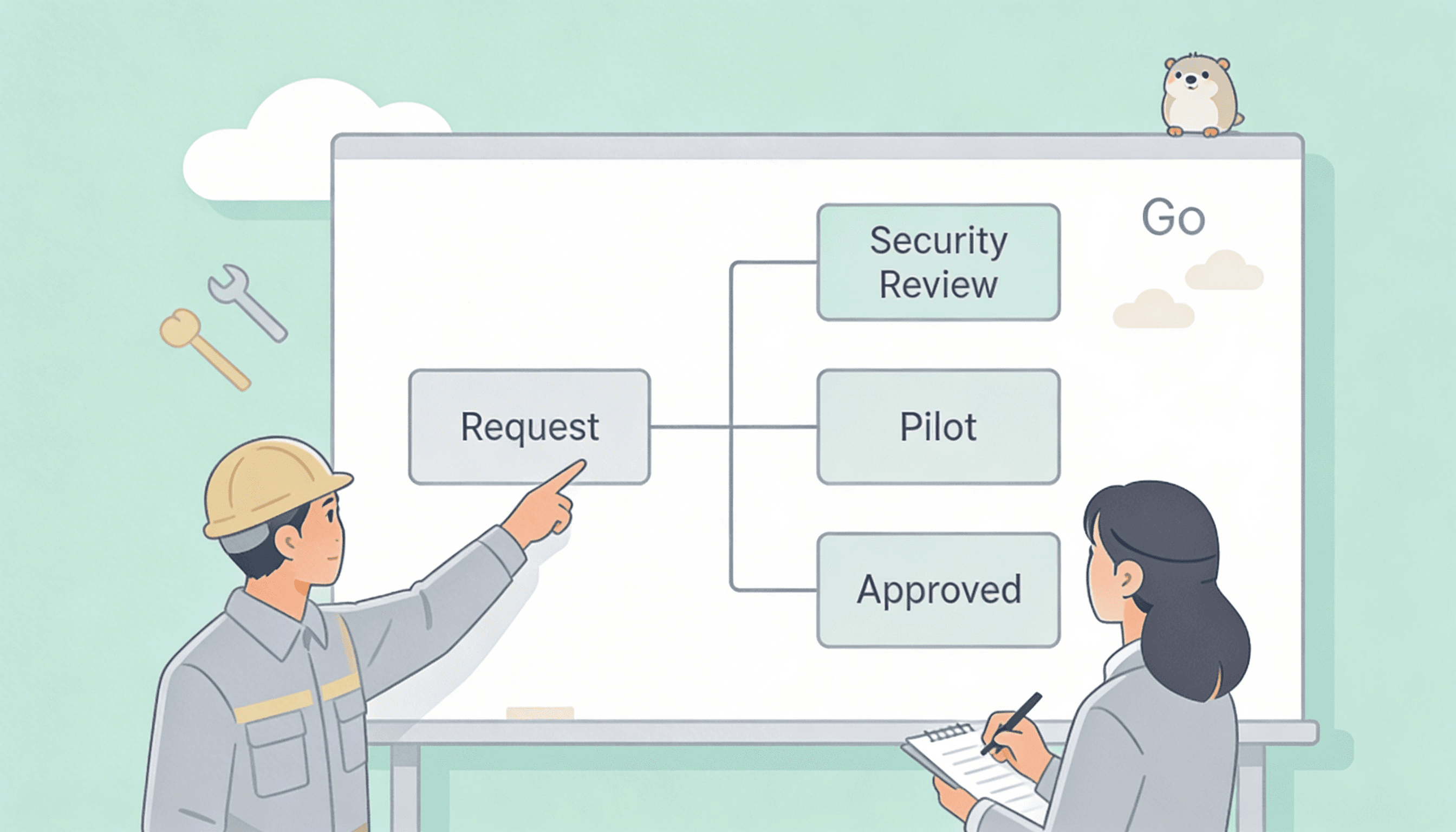
Before Go 1.24, versioning CLI tools in Go wasn’t impossible, but it was awkward. The traditional pattern involved creating a tools.go file with blank imports to force the module to register the dependency. It worked, but it felt artificial. It generated static analysis warnings, added extra files, and made the project harder to understand for new team members. Not elegant and in engineering, what’s not elegant often becomes operational debt.
Managing tools outside the module introduced another risk: environment drift. What runs on one developer’s machine may not match what runs in CI/CD. That divergence starts small, but it compounds over time.
Tool directives allow registering tools directly in go.mod, with no hacks or fake imports. But the real value isn’t just removing a file it’s formalizing tooling management as part of the project’s contract.
When tools are an explicit part of the module:

At Meteor Labs, when we talk about technical governance, we don’t only mean infrastructure or monitoring. We mean how decisions are made that affect the full development lifecycle.
Including tools inside the module:
Mature teams don’t rely on implicit configurations they formalize them, a project that depends on a linter manually installed on every machine is fragile, a project where tooling is versioned, auditable, and runnable from the module itself is more predictable.
Go 1.24 doesn’t change the architecture of the production system, but it does improve the architecture of the development environment — a layer often ignored until it becomes a problem.
Introducing tool directives in Go 1.24 may look like an incremental improvement, but it’s actually a move toward stronger formalization of the technical environment.
Managing tools is not an operational detail — it’s an architectural decision. When tooling stops being a workaround and becomes an explicit part of the module, the project gains clarity, control, and maturity. For teams aiming to scale without losing stability, these small structural changes are the ones that really make a difference.