In microservice architectures, the complexity lies not in deploying more services but in understanding how changes relate across them. When multiple pipelines trigger from a single commit and there is no clear traceability between code and deployment, speed becomes risk. Avoiding production chaos requires separating responsibilities, designing visibility from the start, and making traceability a central part of the system rather than an afterthought.
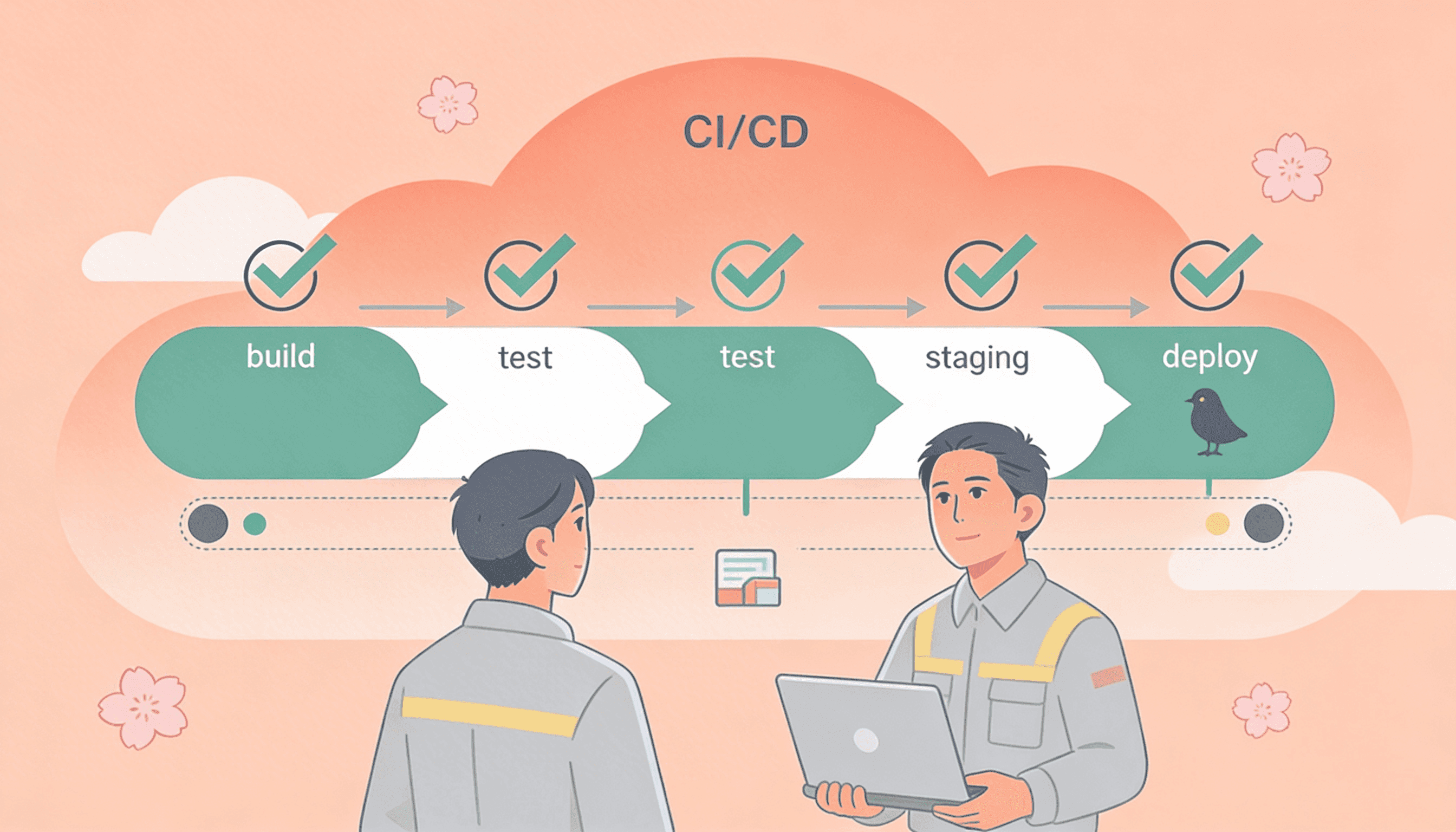


In microservice-based architectures, every change can affect multiple components at once. What used to be a single deploy is now dozens of pipelines running in parallel, with cross-dependencies and different teams working on the same repository. Without a clear CI/CD strategy, traceability, and operational control, speed turns into disorder. Preventing production chaos is not a matter of isolated tools but of operational design and structural clarity from the start.
In distributed environments, a change to a shared library or a contract can trigger multiple deployments. When this happens without clear visibility, teams lose context: they don’t know exactly which commit produced which deployment or which services were impacted. The issue isn’t purely technical it’s systemic. Without traceability, each incident becomes costlier to investigate and resolve.

CI validates code. CD deploys declarative infrastructure. Mixing these layers creates confusion and breaks core principles like GitOps. A well-defined separation enables:
Beyond the container image picture Many implementations connect CI and CD using images as the interface, relying on tools such as Argo CD or Flux CD. While functional, this approach can fall short when multiple services share changes or when different artifact types are involved. As the system grows, simply observing versions is no longer enough to understand real impact.
A healthy pipeline needs context, not just versions.

The key questions in production are always the same:
When you can navigate directly from the code repository to the deployment, you drastically reduce diagnosis time and increase operational confidence. Traceability is not a cosmetic upgrade it is a condition for complexity to scale without breaking.
At Meetlabs we understand that systems don’t fail because they’re microservices; they fail because there’s no structural clarity. We design architectures where CI and CD are clearly delineated, where every deployment keeps the context of the change that triggered it, and where observability begins at flow definition, not at the monitoring tool. Our approach doesn’t aim to add more processes but to reduce uncertainty. Because scaling is not about deploying faster it’s about deploying with control.
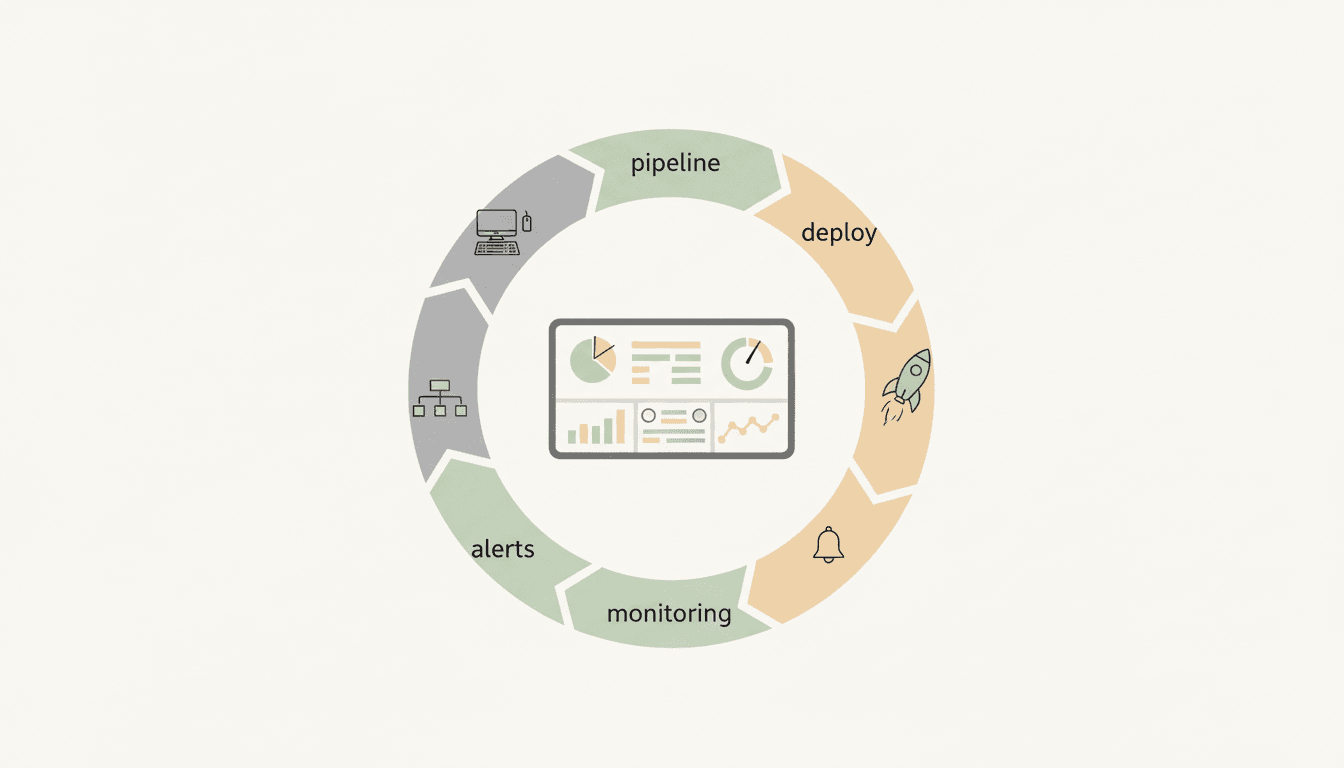
Competitive advantage no longer comes only from more resources or talent, but from greater operational coherence. Companies that orchestrate decisions, processes, and data in real time reduce friction, eliminate improvisation, and accelerate adaptability. An enterprise operating system is not just another tool; it is the infrastructure that turns strategy into continuous execution. Without that architecture, a company reacts. With it, a company anticipates.