Adjust before you scale: effective tuning for enterprise RAG systems
Building a RAG system is more than just wiring a model to a knowledge base. In enterprise settings where accuracy, consistency, and reliability matter more than quick demos—the real differentiator is tuning. In this article we explore practical ways to optimize RAG systems, referencing real configurations used with AWS Bedrock, and show how this approach aligns with Meetlabs’ vision: AI systems that understand context, reduce errors, and scale under control.
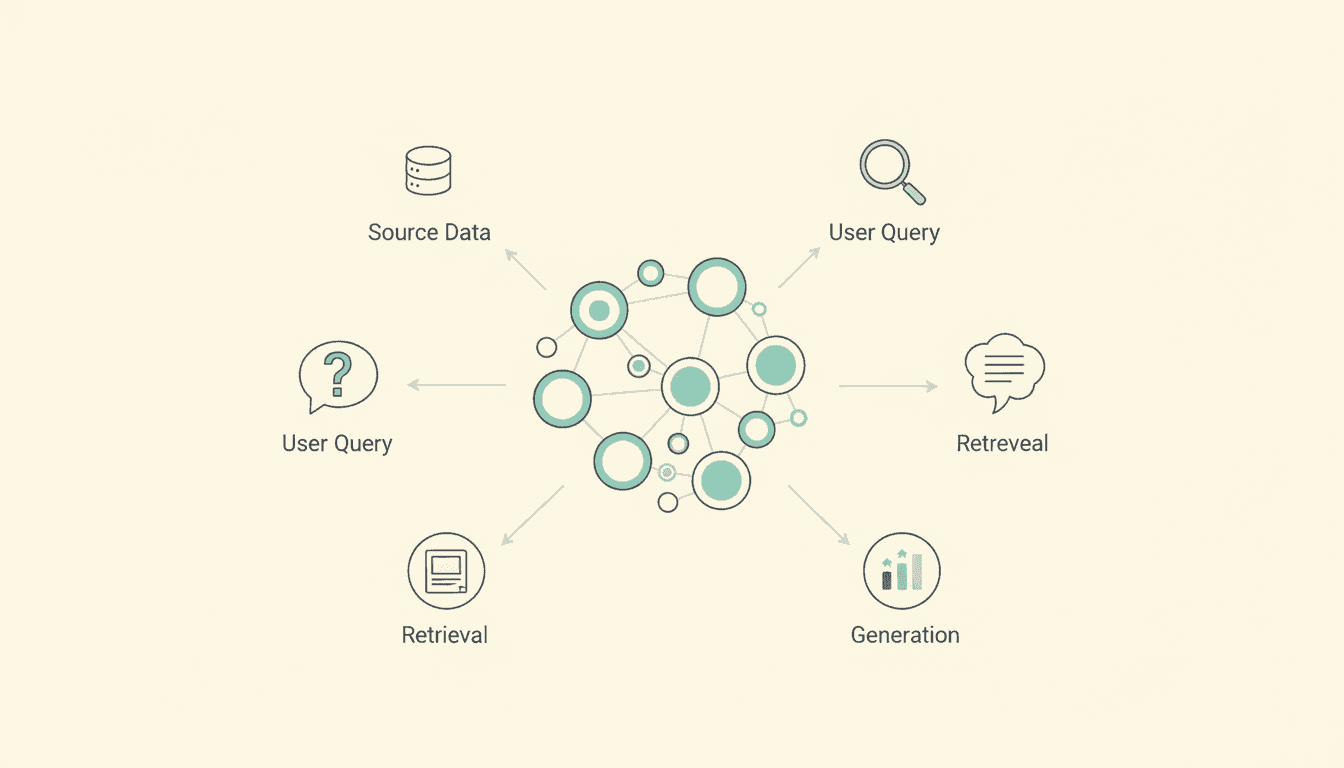


Table of Contents
Introduction
At Meetlabs we work from a clear premise: a RAG that “works” is not always a RAG that is useful. Many implementations produce an answer, but not necessarily the correct, expected, or business-useful one. As RAG systems move from internal tests to real-world use sales, support, internal analytics, or decision-making common problems appear: inconsistent answers, irrelevant information, context loss, or even hallucinations. The cause is rarely the base model. Almost always it’s lack of tuning.
The problem with untuned RAGs
An untuned RAG typically fails in very specific ways:
- It retrieves too much information and “confuses” the model.
- It retrieves too little information and responds with gaps.
- It changes response style or criteria between similar queries.
- It prioritizes incorrect fragments from the knowledge base.
In business contexts, this is not just a technical issue: it’s a trust issue.

Part 1: Retrieval Optimization
Quantity and quality of results
One of the first critical adjustments is how many passages are retrieved from the knowledge base but more is not always better.
- Too few results → incomplete answers
- Too many results → noise and loss of focus
- The optimal point depends on the domain and query type
At Meetlabs, tuning this parameter is key so the AI prioritizes truly actionable information.
Semantic search vs. hybrid search
Semantic search understands intent, but it doesn’t always capture exact terms. Hybrid search combines intent + keywords.
This is especially useful when:
- Users ask ambiguous questions
- There are internal concepts, acronyms, or proper names
- Natural language doesn’t match the documentation exactly
Re-ranking: deciding what matters first
Finding information isn’t enough; it must be well-ordered. Re-ranking enables you to:
- Reprioritize the most relevant passages
- Reduce responses based on secondary context
- Increase consistency of the final output
- Re-ranking is one of the adjustments with the most direct impact on response quality.
Part 2: Generation and Orchestration Optimization
Query decomposition
- Complex questions often hide multiple intents in a single sentence. Splitting them before retrieval dramatically improves accuracy.
- Increases hit rate in retrieval
- Reduces partial or disordered answers
- Improves the system’s internal logic
Consistent prompts, consistent responses
The prompt that connects retrieval to generation defines the RAG’s “behavior.”
A good prompt:
- Sets tone and level of detail
- Reduces contradictions
- Avoids speculative answers
At Meetlabs, this is crucial to keep coherence across different flows and teams.

Inference parameters
Temperature, token limits, and top-p are not minor details.
- Low temperatures → more stable responses
- Token control → prevents rambling
- Fine-tuning → balances creativity and precision
Proper tuning here determines whether the system feels reliable or unpredictable.
Recommendations
- Tune the number of retrieved results to avoid noise or lack of context.
- Combine semantic and keyword search to cover ambiguous queries.
- Apply re-ranking to prioritize truly relevant information.
- Decompose complex queries before retrieval to improve accuracy.
- Standardize prompts and inference parameters for consistent responses.
Conclusion
Optimizing a RAG system is not optional it’s mandatory when building real enterprise solutions. The value is not in connecting more models, but in understanding how to retrieve, prioritize, and generate information in a controlled way. At Meetlabs, this approach moves systems from “interesting” assistants to reliable, scalable AI systems aligned with business decisions.
Glossary
- RAG: Architecture that combines information retrieval with text generation.
- Re-ranking: Reordering results according to true relevance.
- Hybrid search: Mix of semantic search and keyword search.
- Inference: The process by which the model generates an answer.
- Orchestration: Control of the flow between retrieval, logic, and generation.