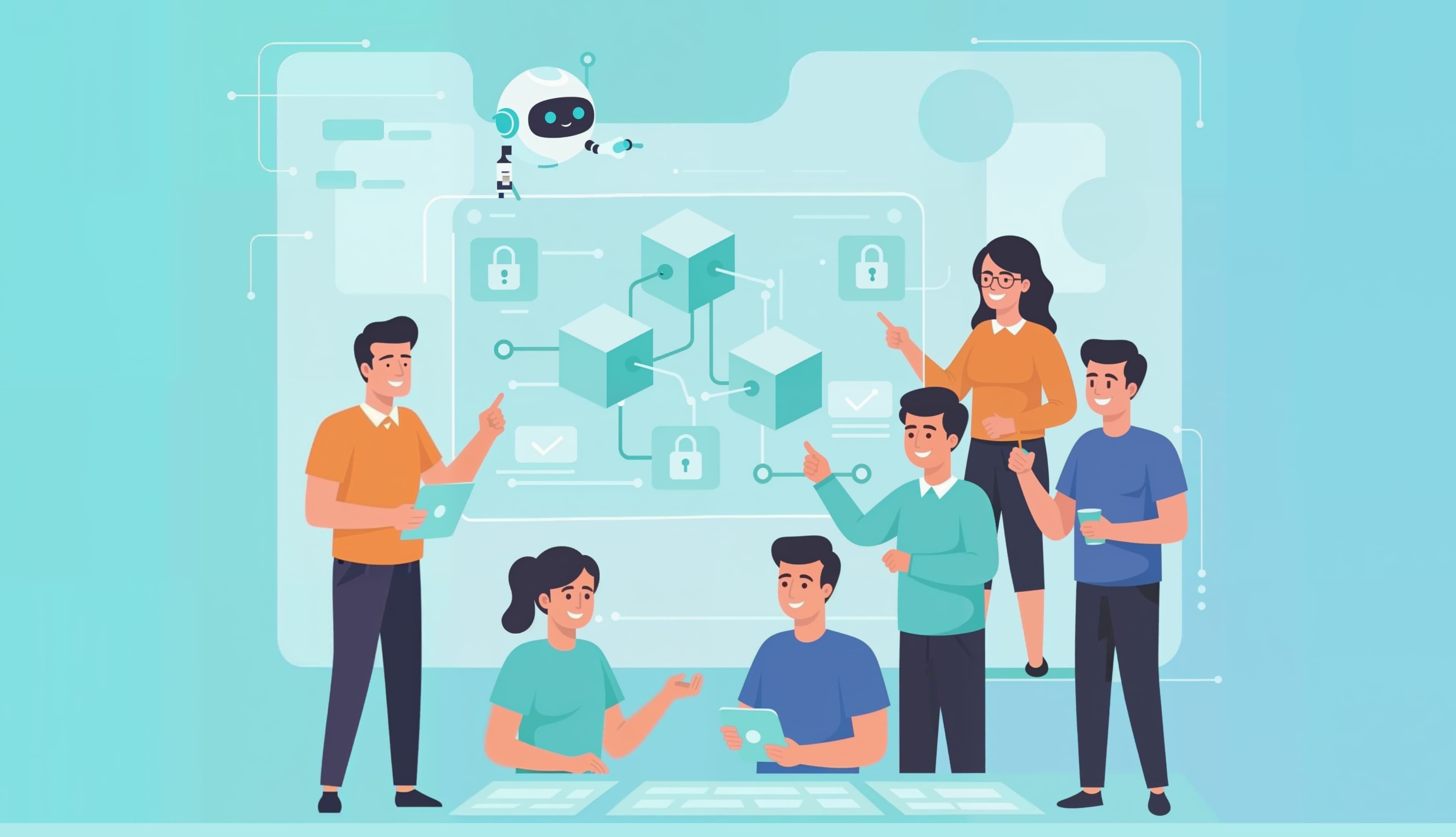
MeetLabs spent two days on the floor at WebX 2026 in Tokyo talking to the people building the next wave of Web3. Here are the five trends we believe will matter most, from AI's new case for institutional blockchain to the fan economy's first real Web3 moment.
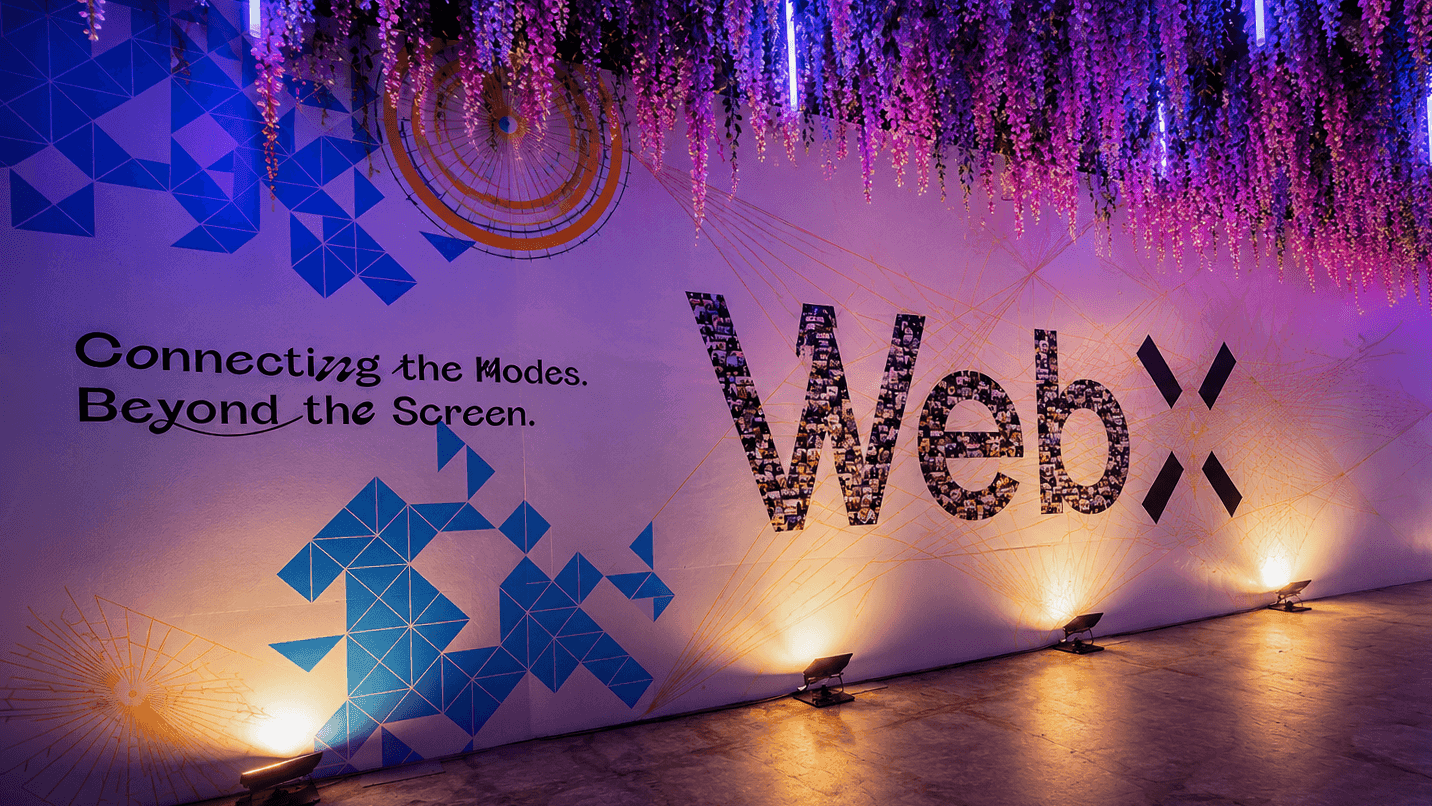


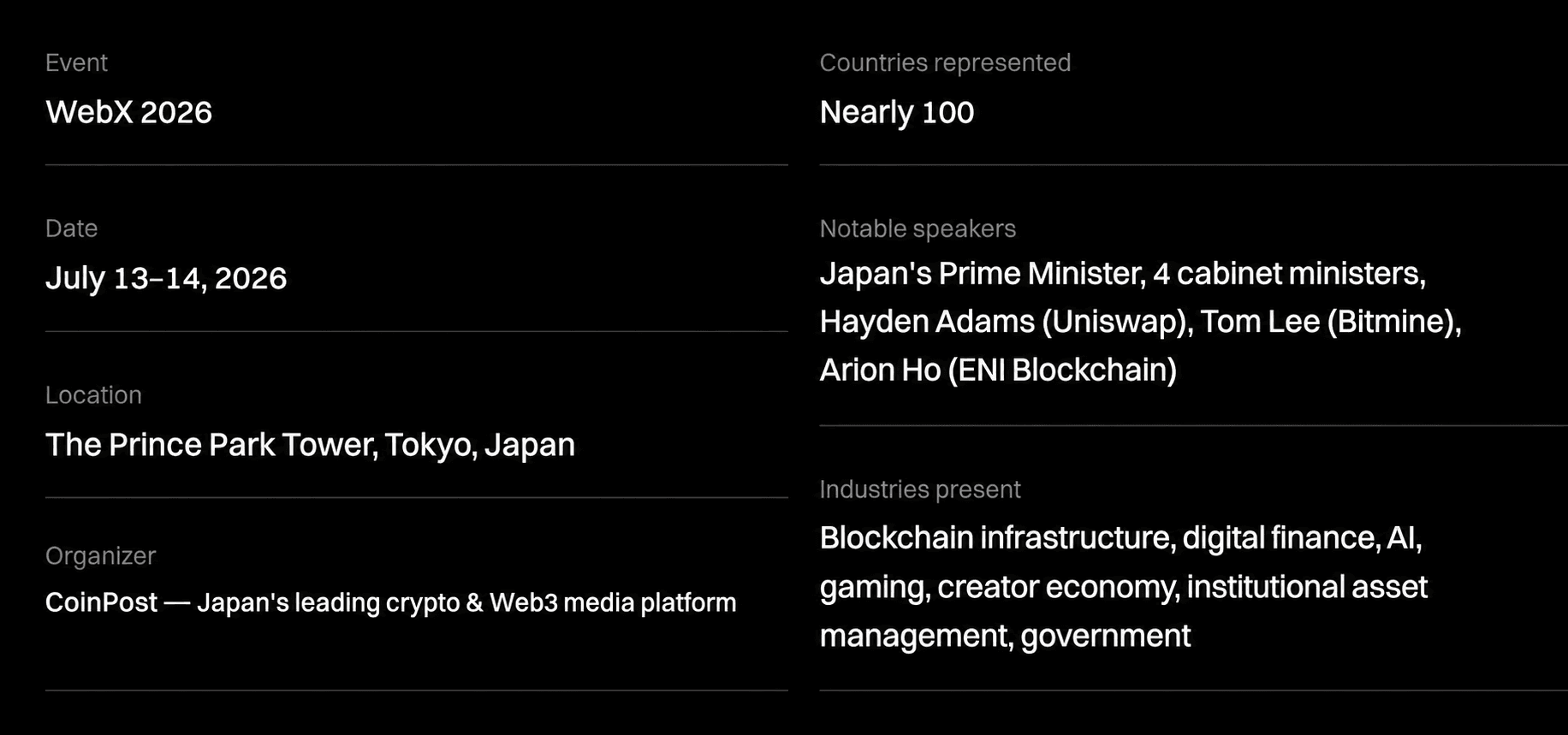
WebX 2026 brought together thousands of participants from nearly 100 countries over two days at The Prince Park Tower in Tokyo. Founders, investors, developers, enterprises, financial institutions, and government officials gathered to discuss where Web3 is heading next, and, more importantly, what is already working today.
MeetLabs attended to do what we do best: get close to emerging technology, speak directly with the people building it, and separate signal from noise. We visited stands, attended keynote sessions, and came away with a clearer picture of the trends that will define the next phase of Web3, AI, and digital product development.
This is what we found.
After two days on the floor at WebX 2026, these are the signals we think matter most — not what everyone is saying, but what we actually believe based on what we saw.
1. AI will pull more institutions into blockchain than crypto ever did. The argument that AI agents need blockchain to operate financially is compelling and underappreciated. As AI systems become more financially capable, demand for programmable, compliant, cross-border infrastructure will grow fast. In our view, institutional blockchain is better positioned to capture that demand than permissionless chains — at least for the enterprise and government use cases that AI will drive.
2. RWA tokenization is crossing from pilot to production, quietly. Tokenized real estate, bonds, and bank deposits are not concepts in Japan. They are live financial products available to retail and institutional investors, backed by major financial institutions and licensed by regulators. This transition will accelerate globally.
3. The fan economy is the consumer face of Web3. Sports, music, and entertainment are where Web3 touches the widest non-crypto audience. The creators and athletes who adopt it first will benefit from first-mover loyalty effects permanently preserved on-chain. Platforms that solve this well — real payments, real identity, real community — will matter.
4. Japan is setting the regulatory template that the rest of Asia will follow. Japan is not just watching the space — it is actively legislating it, funding it, and positioning itself as the compliant global hub for institutional blockchain. Companies that establish a presence now will be significantly better positioned than those that enter after the market matures.
5. The next generation of Web3 products will be invisible. The most interesting companies at WebX weren't asking users to understand blockchain. They were wrapping it in experiences where the technology becomes irrelevant to the end user. That abstraction is what mass adoption actually looks like.
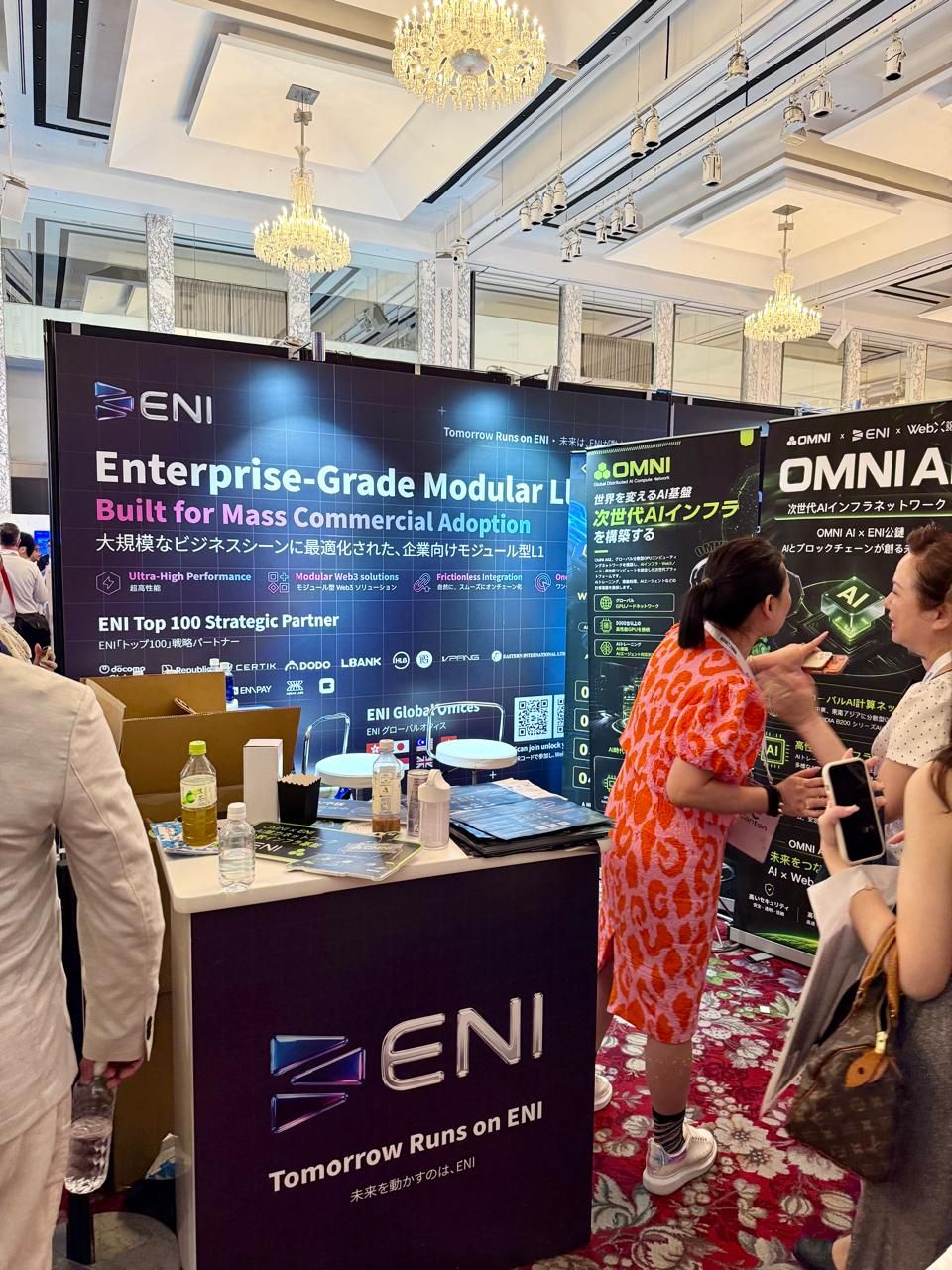
The most memorable argument at WebX 2026 came from Arion Ho, Founder and CEO of ENI Blockchain, a former executive at HKEX, UBS, and Standard Chartered. His thesis: no bank or government will ever allow an AI agent direct access to a traditional bank account. The only viable channel for AI to interact with financial systems at scale is institutional-grade blockchain. AI doesn't just benefit from Web3 — it may require it.
That framing shifted how we looked at everything else at the event. Across the exhibition floor, AI was showing up not as a standalone feature but as a layer inside blockchain platforms for moderation, analytics, compliance, and autonomous financial operations. The convergence of AI and Web3 is not speculative. It was on display in working products.
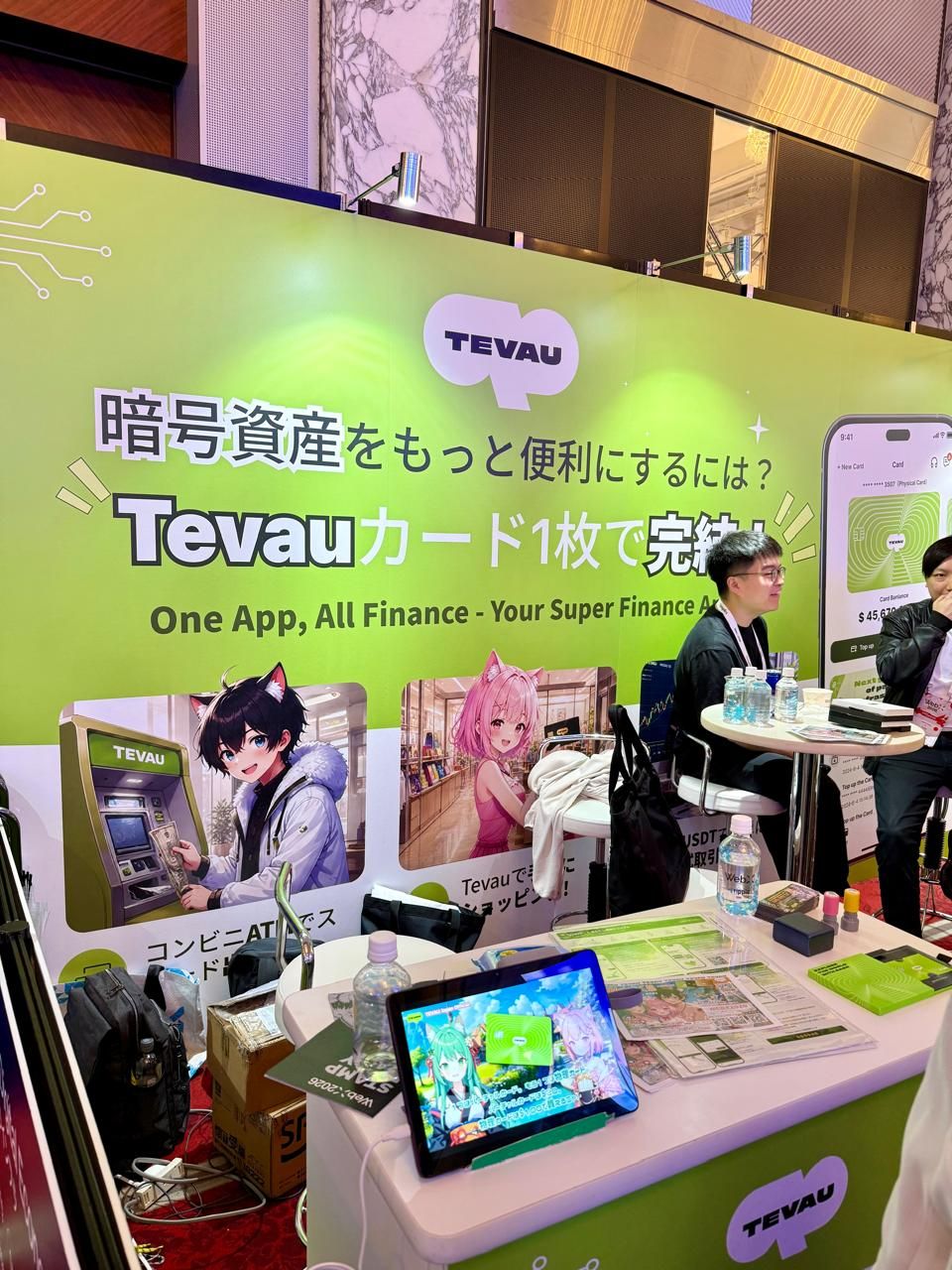
Payments were everywhere at WebX — not just as a topic, but as live infrastructure. Tevau showed a super finance app enabling stablecoin-based stock trading and ATM access via crypto card. DCJPY (DCP) offers tokenized bank deposits as corporate payment rails, already operational at two Japanese banks with 30+ more targeted by 2028. UPCX is building high-throughput payment infrastructure for real-world applications.
What this means: the question is no longer whether crypto can be used for payments. It's which rails will win — and whether institutions and consumers will adopt them before they realize they already are.
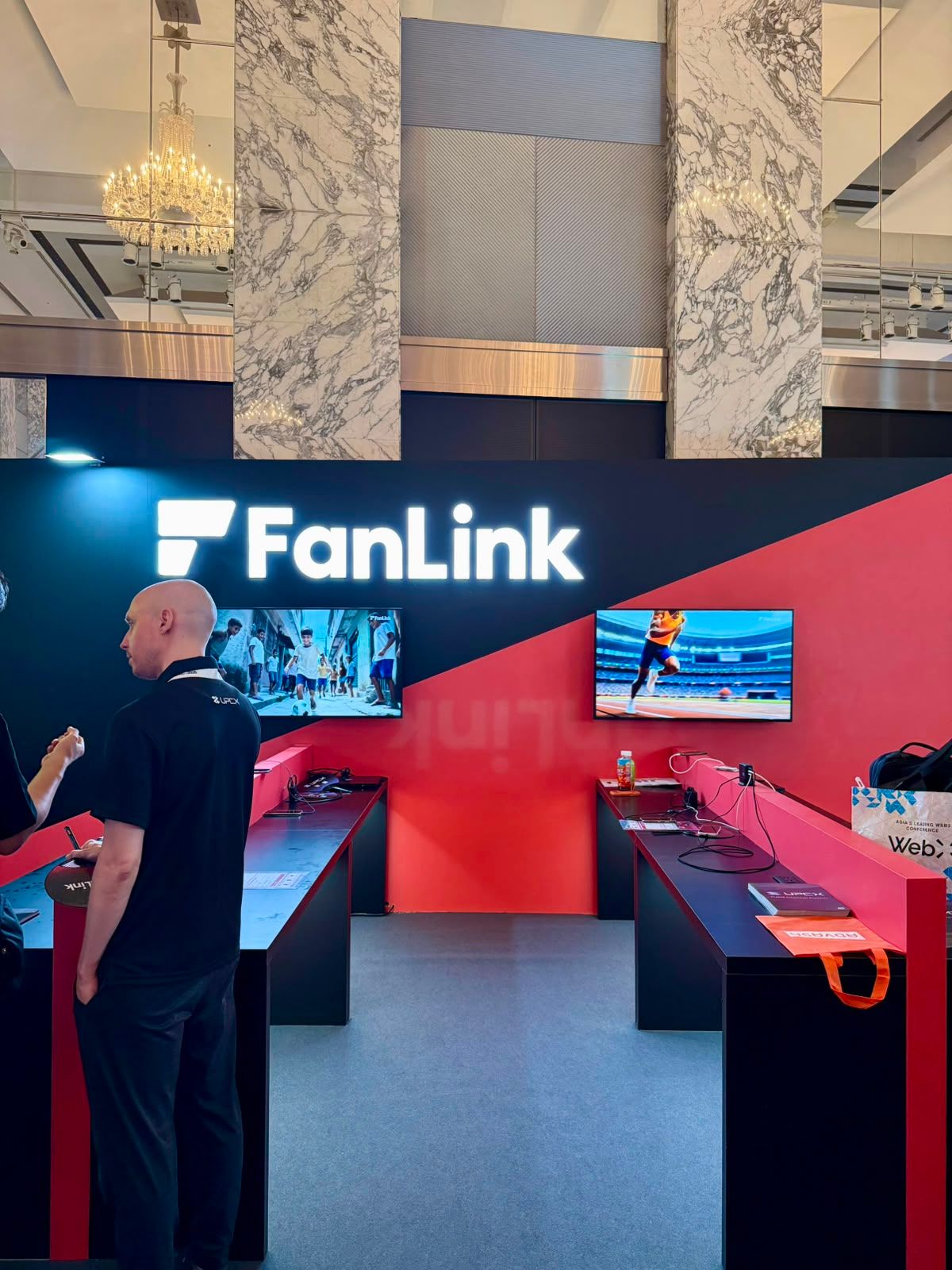
The creator economy generated some of the most organic conversation on the exhibition floor, and FanLink Labs was at the center of it. Their session made a sharp case: existing platforms extract up to 70% of what fans send to emerging artists and athletes, fragment identity, and delay payments by weeks. FanLink puts every transaction on-chain, routes payments directly via smart contracts, and gives creators and fans a transparent record of their relationship from day one.
What made them stand out wasn't just the argument. At their booth, visitors scanned QR codes, explored merchandise tied to creator profiles, and completed real on-chain purchases. The transactions processed without failure throughout both days. For a pre-scale platform, that's a meaningful proof point.
If there was one thing that surprised first-time WebX attendees, it was the level of government presence. Japan's Prime Minister Sanae Takaichi addressed the event. Four cabinet ministers (Finance, Economy, Digital Transformation, and the Chair of the AI and Web3 Subcommittee) were present or directly represented.
This is not routine. Based on what we observed, no other government is currently sending this level of political representation to a Web3 conference. Japan is legislating, funding, and actively building the regulatory environment for institutional blockchain. For any company looking to operate in Asia's digital asset market, that's the most important backdrop of all.
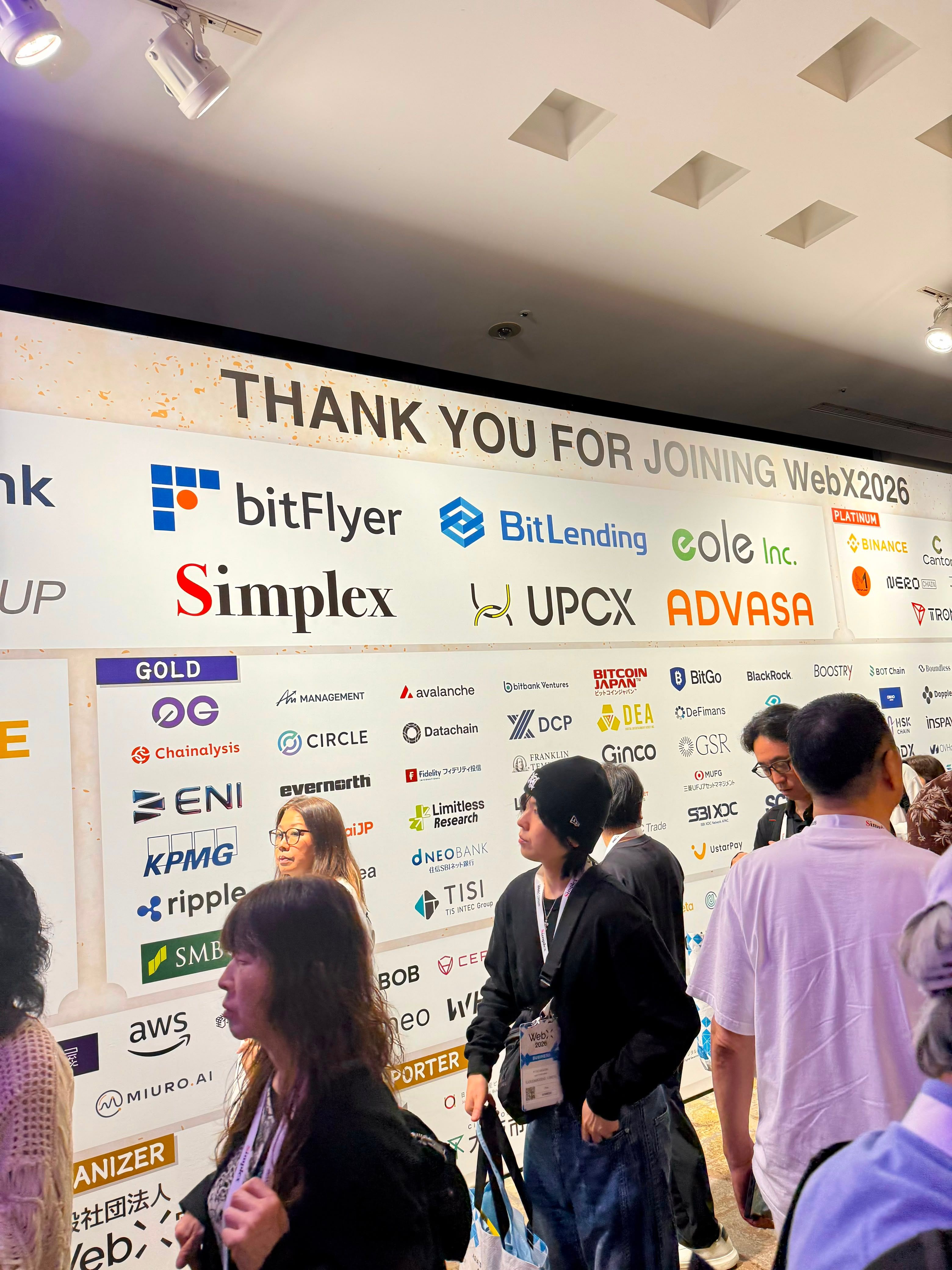
These are the companies that stood out either for their product, their booth, or the conversations they generated.
ENI Blockchain — Institutional blockchain built from compliance up, designed from day one for banks and regulated institutions. 100+ Supernodes across Southeast Asia and Japan. Their closing thesis: "Tomorrow runs on ENI." Whether or not that proves true, their institutional pipeline is real.
FanLink Labs — The creator economy platform that ran live on-chain transactions at WebX without failure. The problem they're solving is real, the technology is in production, and the fan economy vertical is early enough that first movers will matter.
Metaplanet — Japan's third-largest corporate Bitcoin holder (43,000 BTC), listed on the Tokyo Stock Exchange. Metaplanet Ventures is deploying ¥4 billion into Bitcoin-adjacent infrastructure. This is the MicroStrategy playbook, now established in Japan's public equity markets.
Tevau — A super finance app that makes DeFi invisible to the end user: stablecoin trading, ATM access, US stock market exposure, all from one interface. Watch this space as super finance apps mature in Asia.
Binance — Platinum sponsor with a bold all-yellow presence. Their commitment to Japan as a strategic market is consistent and significant.
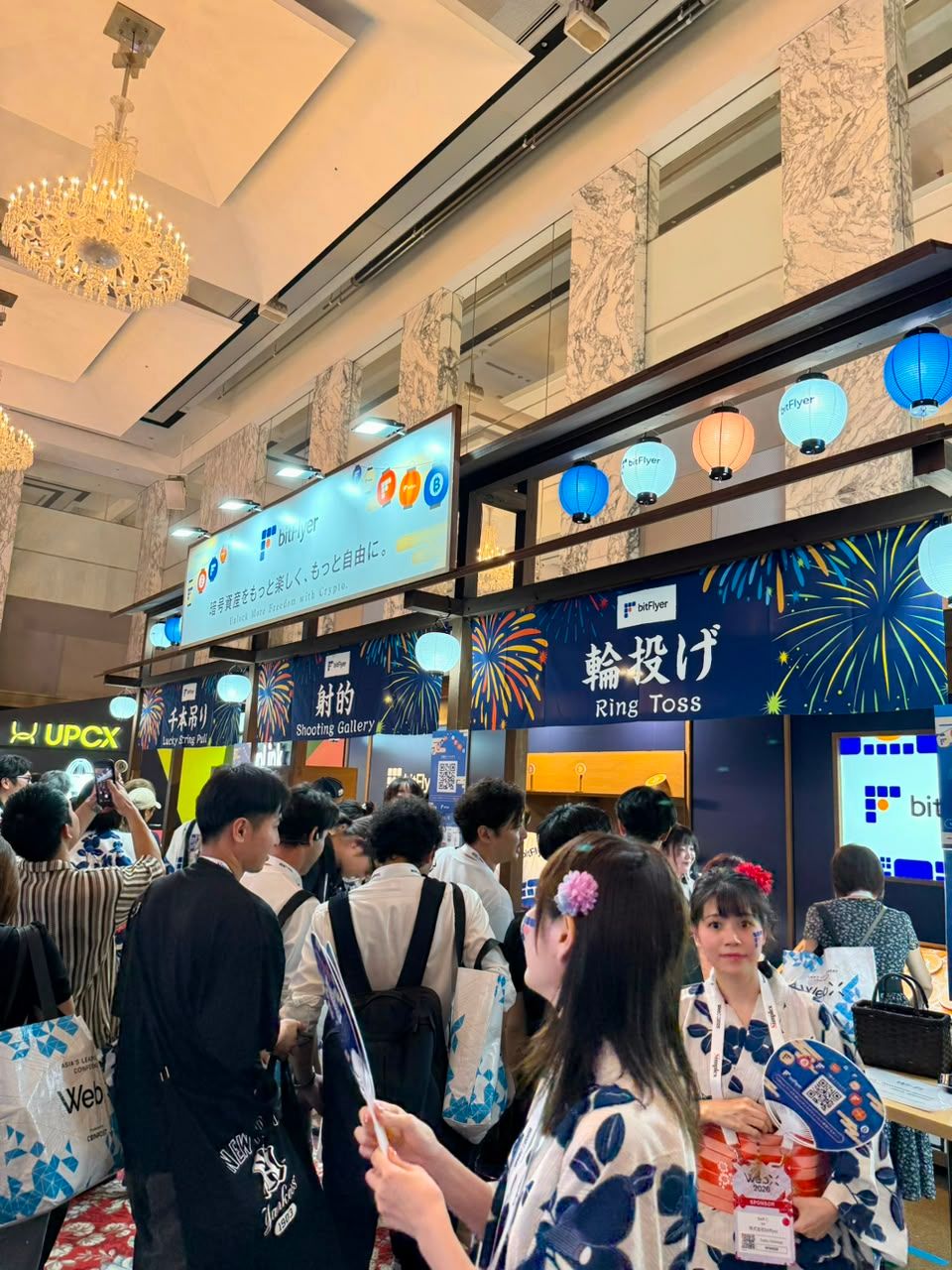
bitFlyer — One of Japan's most established exchanges, with the most creative booth activation at the event: a festival-themed stand with traditional Japanese games. Culturally fluent and consistently busy.
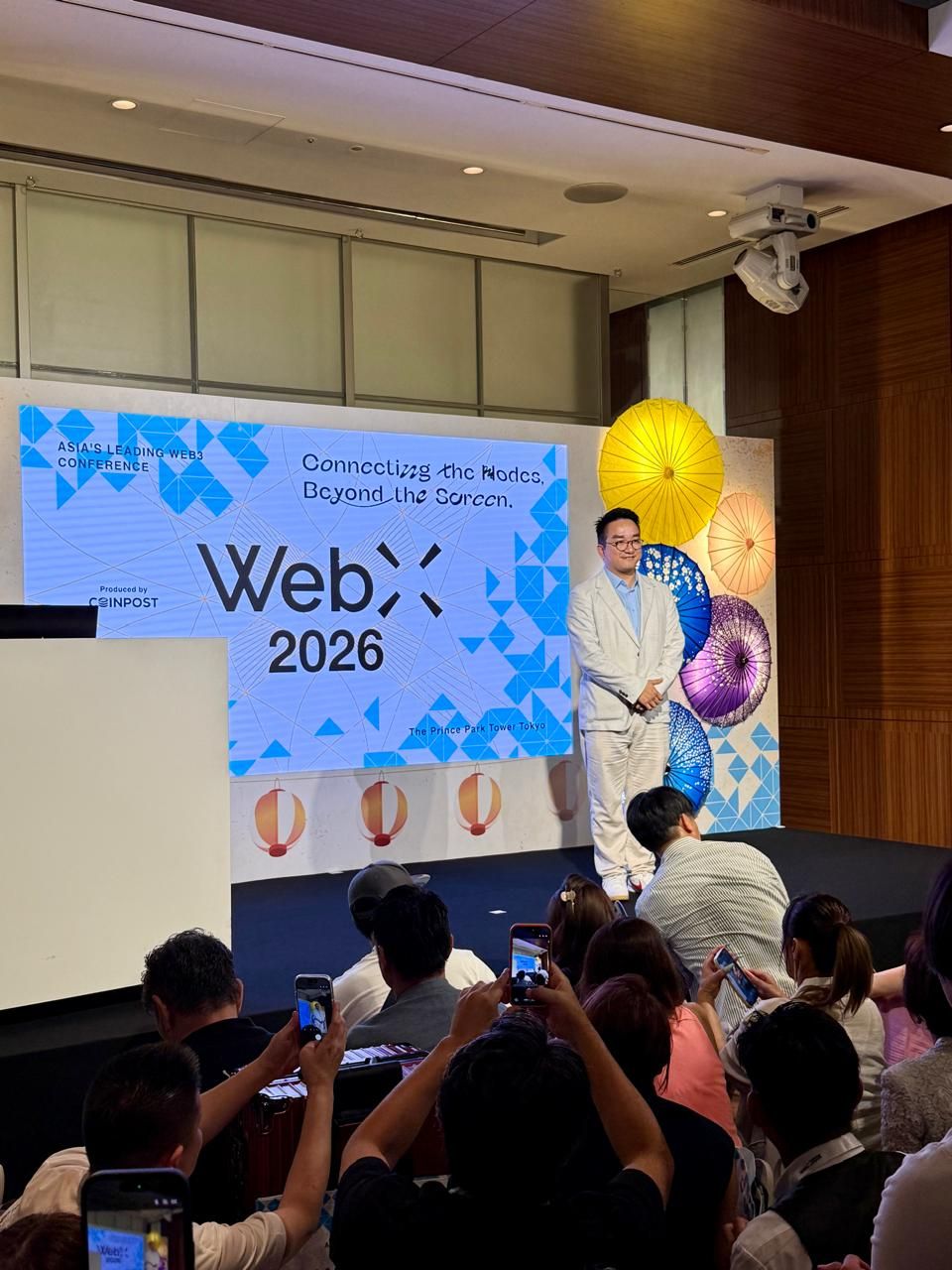
"TradFi × Web3: Building the Bridge for Institutional Adoption" — Arion Ho, Founder & CEO, ENI Blockchain
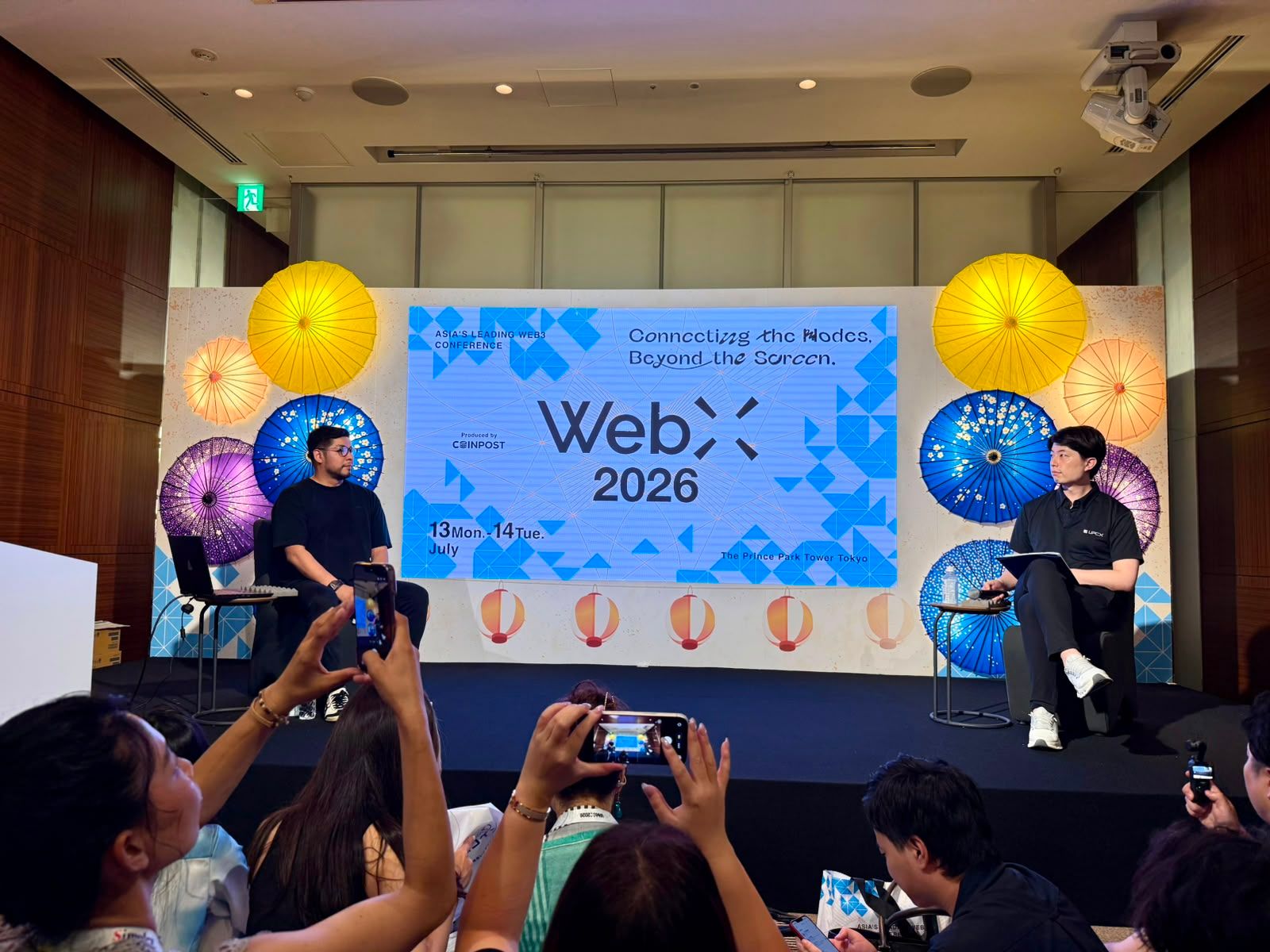
"The Future of Fan Engagement: How AI, Governance and Web3 Are Reshaping Fan Communities" — Fabian Mezarina, FanLink Labs | Moderated by Koki Sato, UPCX
WebX 2026 reinforced something we already suspected: the next generation of Web3 products will be defined less by speculation and more by real-world utility. The most significant things we saw weren't token prices or new chain launches — they were live payment systems, tokenized institutional assets, government regulatory frameworks, and creator platforms processing real transactions.
The convergence of AI, blockchain, digital identity, payments, and creator tools is no longer a roadmap. In significant parts, it is already happening. These are precisely the areas where MeetLabs continues to explore, build, and collaborate.
We'll be back at the next one.
If we had to summarize WebX 2026 in one sentence, it would be this:
The conversation has shifted from "Can blockchain work?" to "Which real-world applications are scaling first?"
WebX 2026 confirmed that the next phase of Web3 won't be defined by new blockchains, but by better products. We'll be watching closely.